Beyond the Binder: 5 Seismic Shifts Redefining Consulting in 2026
- Jan 19
- 2 min read
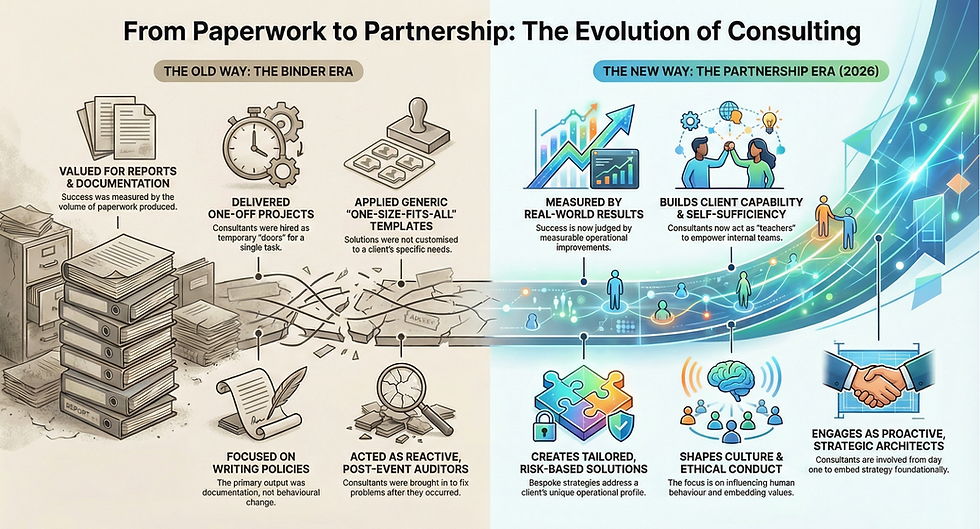
For years, the image of a consultant often involved delivering thick binders of generic advice, but as business challenges grow more complex, that model is obsolete clients in 2026 now demand clarity, practicality and lasting capability from their expert partners. This fundamental shift is reshaping the consulting industry from the ground up.
From Paperwork to Performance
1. Success Is Now Measured in Results, Not Reports
The era of valuing consultants based on the volume of documentation they produce is over. Today, success is judged by measurable outcomes, with businesses seeking evidence of real-world impact such as closed gaps, reduced repeat findings, audit confidence and operational improvement. This pivot to tangible, evidence-based results ensures that consulting investments translate directly into enhanced performance and a defensible competitive advantage.
The most successful consultants in 2026 will be those who ... deliver systems that work in real operations — not just on paper.
From Doers to Teachers
2. Consultants Are Building Capability, Not Just Delivering Compliance
The consulting paradigm has shifted from one-off project delivery to a more sustainable model focused on building an organisation's internal strengths. The new mandate is to create sustainable systems that a client's own teams can maintain, improve and defend long after the consultant exits. This transfer of knowledge fosters true organisational self-sufficiency, reducing long-term dependency on external advisors and building a more resilient, agile workforce.
From Templates to Tailored Solutions
3. The "One-Size-Fits-All" Template Is Dead
Generic, templated consulting is now considered outdated and ineffective. In 2026, businesses expect highly customised solutions specifically aligned to their unique operations, maturity and risk profile. This bespoke, risk-based approach is far more effective because it forces organisations to prioritise what truly matters, allocating resources to their most significant challenges instead of applying costly, blanket solutions.
From Policies to People
4. Culture and Ethics Are the New Centre Stage
Clients are now more concerned with how systems influence actual human behaviour, not just how they look in a policy document. As a result, consultants are increasingly expected to support leadership accountability, ethical conduct, and a strong quality culture, moving beyond simply writing policies. This focus on embedding values is critical for mitigating conduct risk and building a resilient corporate culture that attracts and retains top talent.
From Auditors to Architects
5. Consultants Are Now Strategic Partners from Day One
The role of the consultant has evolved from a post-event auditor to a proactive, strategic partner, with clients now demanding involvement much earlier in key processes like planning, change management and decision-making. This early involvement is pivotal it allows strategy to be embedded foundationally, preventing costly downstream errors and representing a significant shift from reactive problem-fixing to proactive success-building.
These trends point to a clear conclusion: for businesses in 2026, choosing the right consulting partner is less about credentials alone and more about outcomes, trust and long-term value. As businesses navigate an increasingly complex landscape, the role of the consultant is no longer to simply provide answers, but to build lasting capabilities that empower organisations to thrive independently.


Comments